Complete Field Guide
Eight owl species call Texas home, from the tiny Elf Owl of the desert canyons to the widespread Great Horned Owl found in every region of the state. Full ID guide below, plus exactly where in Texas to find each one.
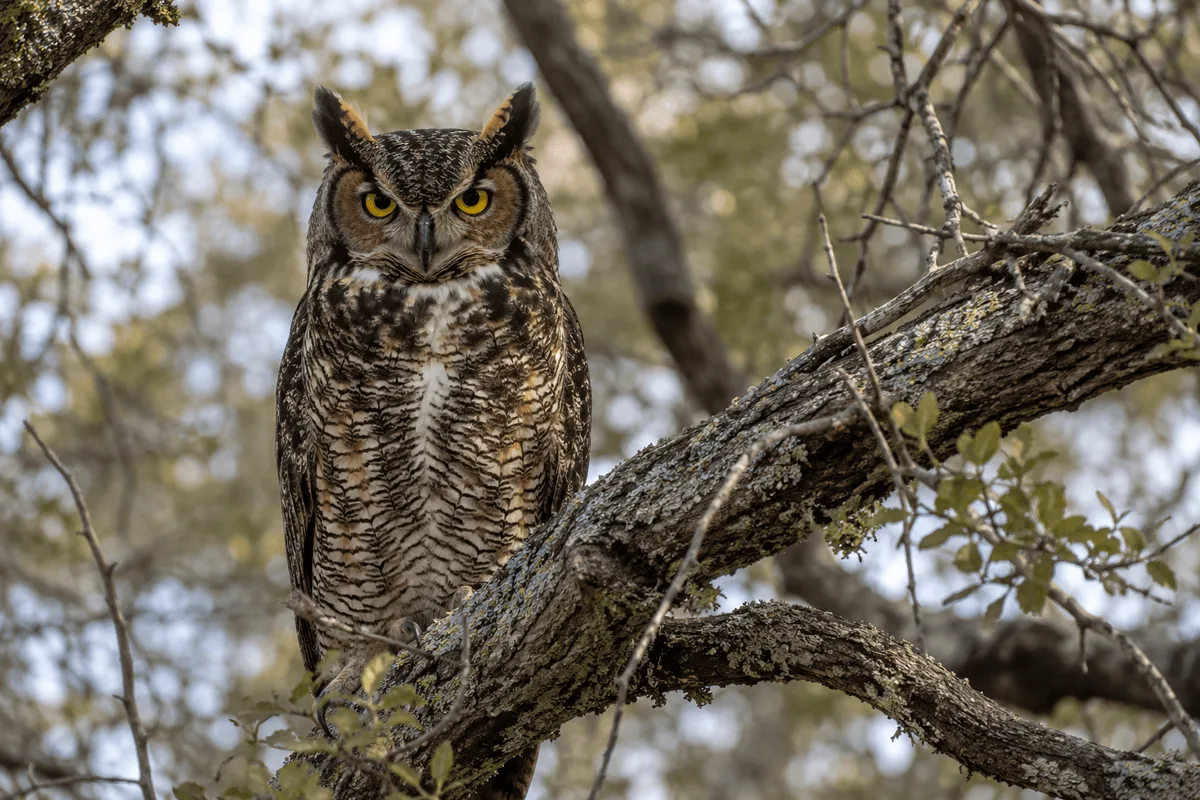
Texas's Most Widespread Owl
The classic "tiger of the sky." Powerful ear tufts, deep yellow eyes, and a grip strong enough to take prey many times its own size — including skunks and other raptors. Found in every region of Texas and every habitat type. Begins nesting as early as December, often taking over an old hawk or heron nest.
Size
18–25 in. tall, 3.3–4.8 ft wingspan
Voice
Deep, rhythmic "hoo-h'HOO-hoo-hoo"
Habitat
Woodlands, coastal live oak mottes, canyons, suburban parks — virtually anywhere with trees
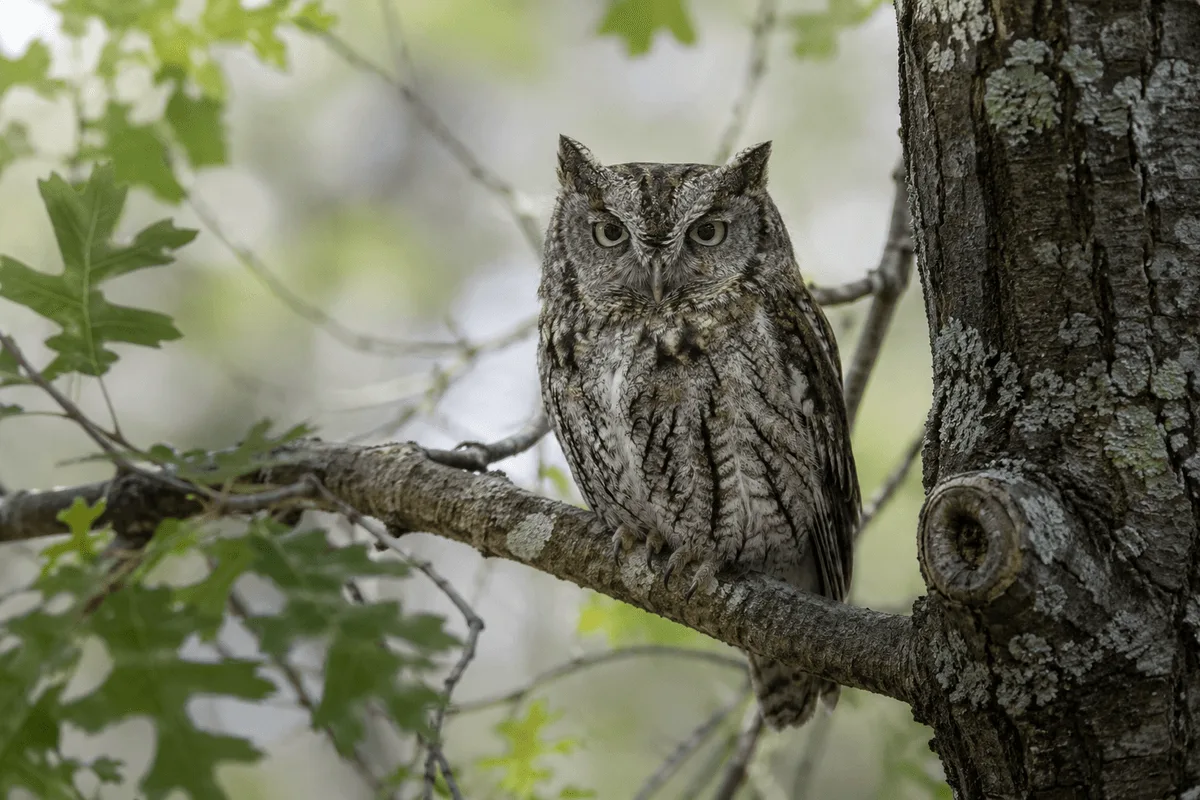
The Backyard Trill
Small enough to fit in a coffee mug, with either gray or reddish-brown color morphs. Common in Rockport neighborhoods and East Texas woodlots alike. Readily uses nest boxes, making it one of the easiest owls to attract to a yard.
Size
6.3–9.8 in. tall, 18–24 in. wingspan
Voice
A descending, whinnying trill — not a screech at all
Habitat
Live oaks, backyard trees, wooded parks, nest boxes
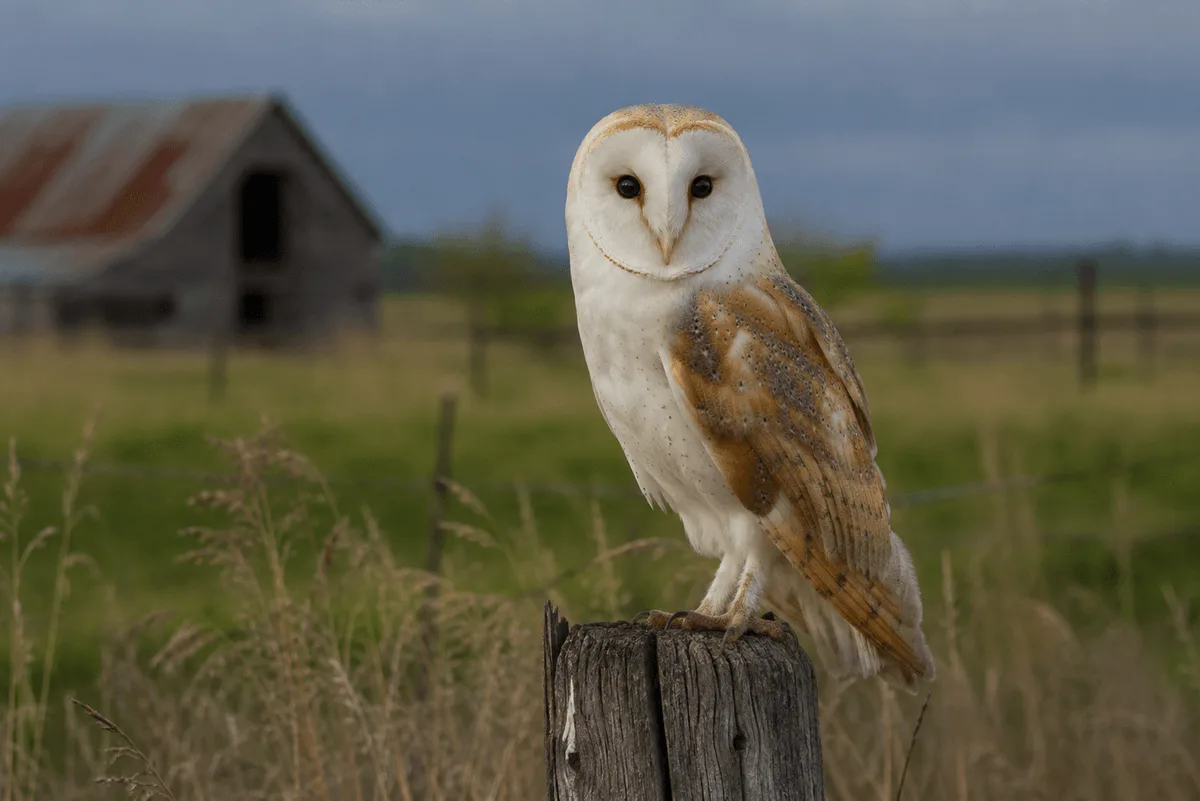
The Ghost of the Barn
Heart-shaped white face, golden-buff back, and near-silent flight built for hunting rodents in total darkness. Found statewide wherever open hunting ground meets a dark roost — grain silos and coastal prairie are prime real estate.
Size
12.6–15.8 in. tall, 3.1–3.7 ft wingspan
Voice
A raspy, drawn-out shriek — no hoot at all
Habitat
Barns, church steeples, palm trees, open farmland and coastal prairie
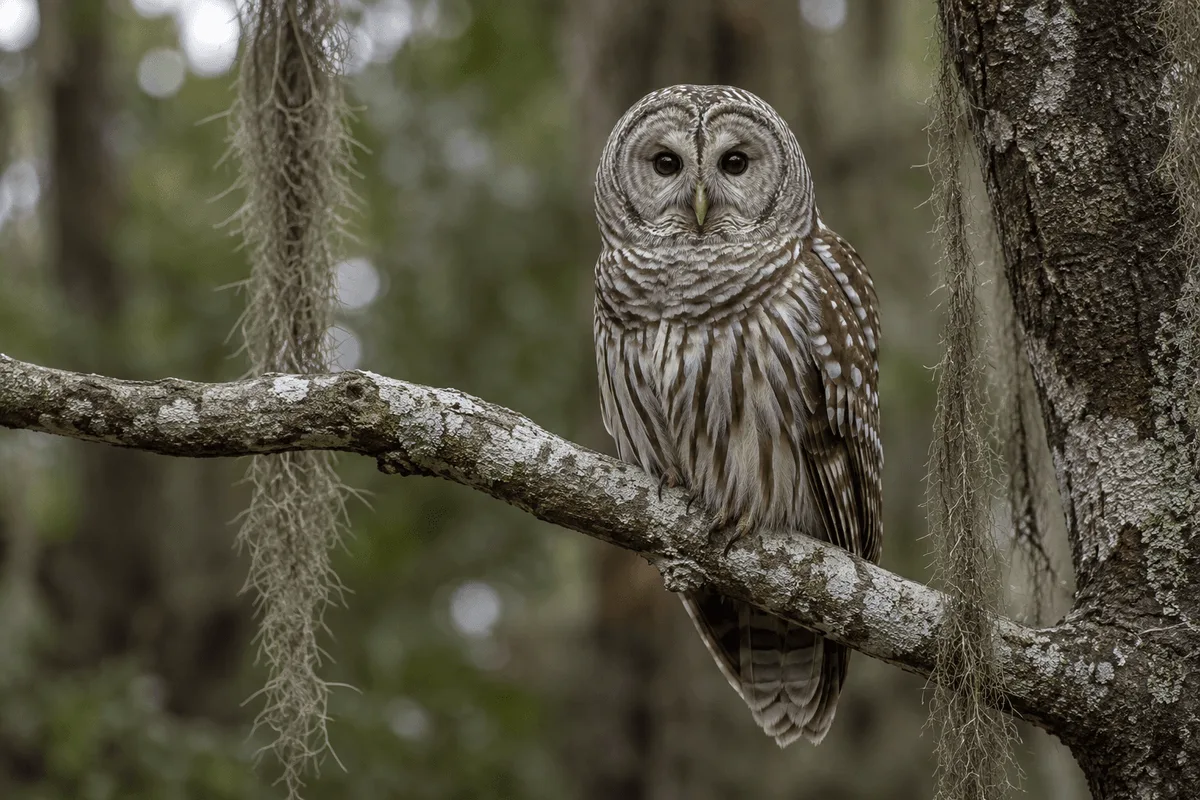
"Who Cooks for You?"
Dark brown eyes (not yellow like most owls) and a barred chest pattern. Needs mature forest with dense canopy — the Piney Woods and Caddo Lake cypress swamps are stronghold habitat. Rare but present in coastal live oak mottes.
Size
16–24 in. tall, 3.3–3.6 ft wingspan
Voice
The classic "who-cooks-for-you, who-cooks-for-you-all"
Habitat
Mature bottomland forest, cypress swamps, wooded river corridors
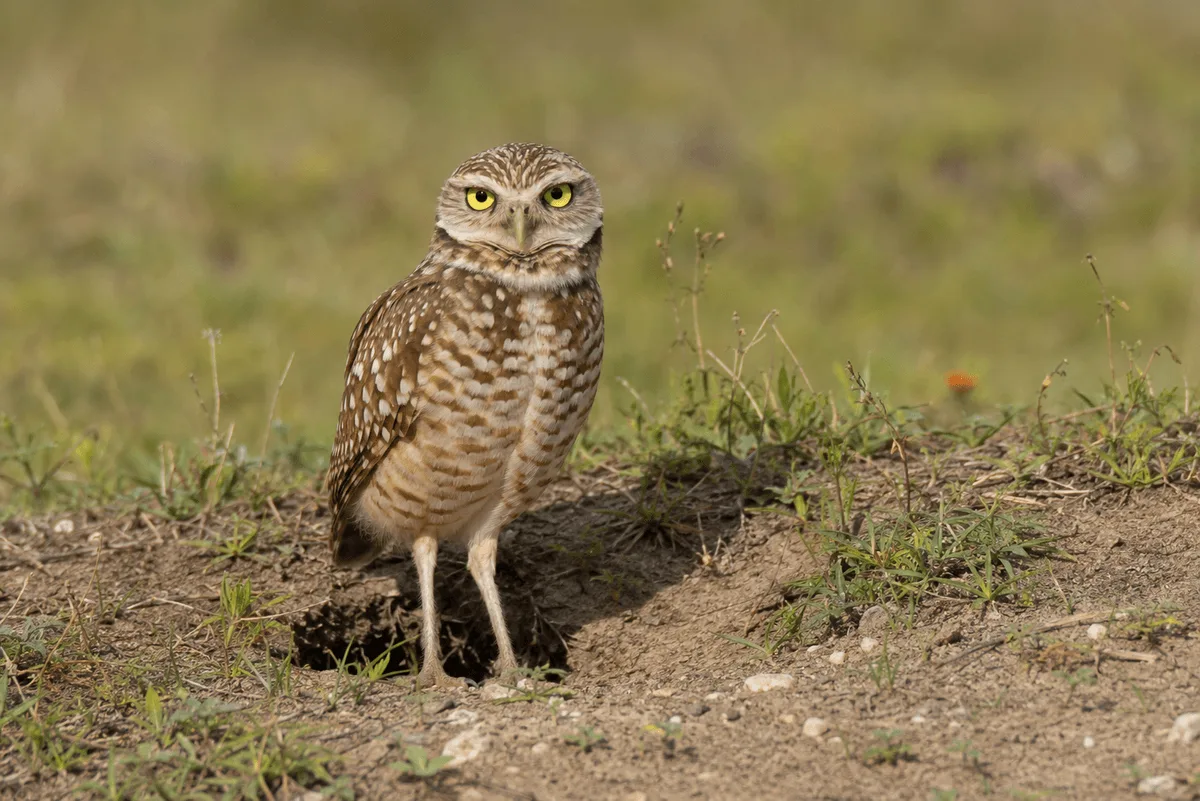
The Ground-Dweller
Long-legged and active by day as well as night, standing sentry at the mouth of a borrowed prairie dog or ground squirrel burrow. Panhandle grasslands hold Texas's strongest breeding population; also a regular winter visitor to the Rio Grande Valley.
Size
7.5–9.8 in. tall, 21 in. wingspan
Voice
A soft coo, plus a rattlesnake-mimic hiss when threatened in the burrow
Habitat
Open prairie, grassland, agricultural fields — nests in abandoned mammal burrows
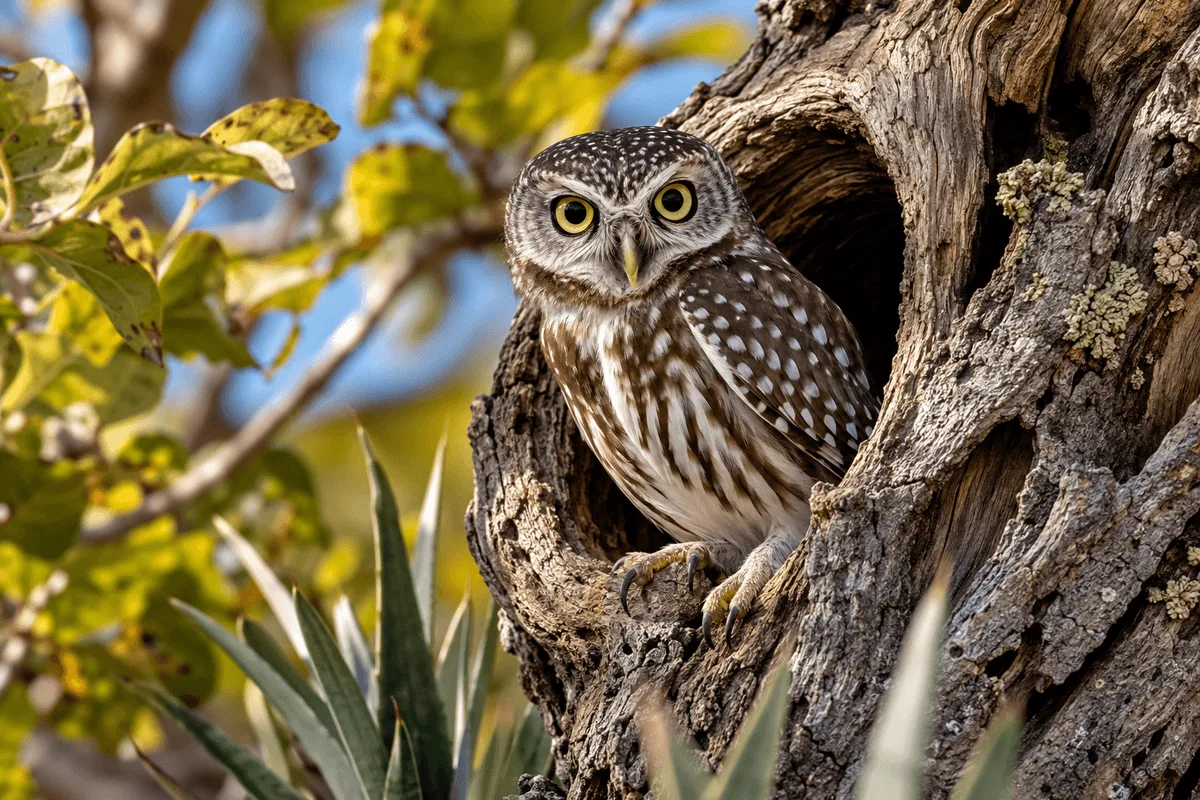
North America's Smallest Owl
Barely bigger than a sparrow. Nests exclusively in old woodpecker cavities, migrating out of Texas entirely for winter. Two disjunct strongholds: the oak-juniper canyons of the Hill Country and the desert sky islands of Big Bend.
Size
4.9–5.7 in. tall, 10.5 in. wingspan
Voice
A rapid, high-pitched chatter, often in duet
Habitat
Woodpecker holes in saguaro-like agave stalks, oaks, and sycamores
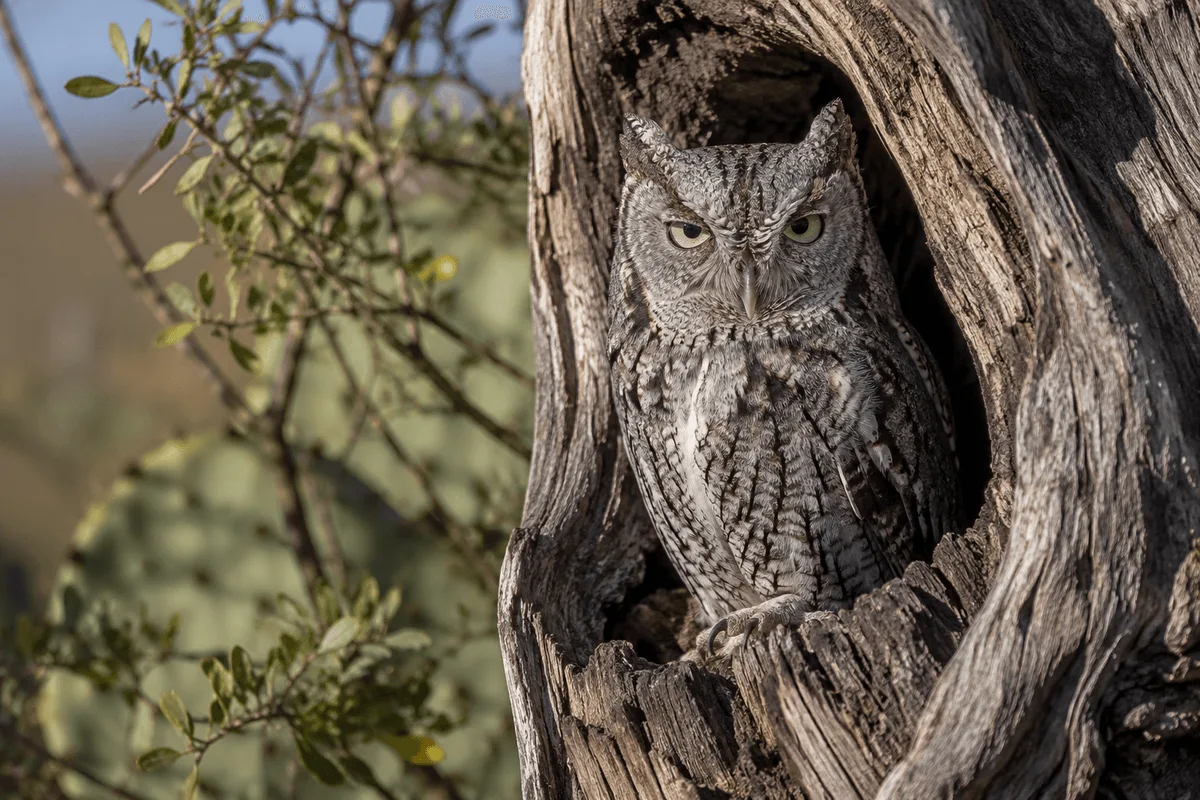
The Hill Country's Desert Cousin
Gray overall, replacing the Eastern Screech-Owl west of the Pecos. The two species' ranges barely overlap in Texas, making this one a genuine Trans-Pecos specialty for visiting birders working a Texas owl list.
Size
7.5–9.8 in. tall, 21–24 in. wingspan
Voice
An accelerating series of hollow "bouncing ball" hoots
Habitat
Desert riparian corridors, canyons, and mesquite/oak woodland
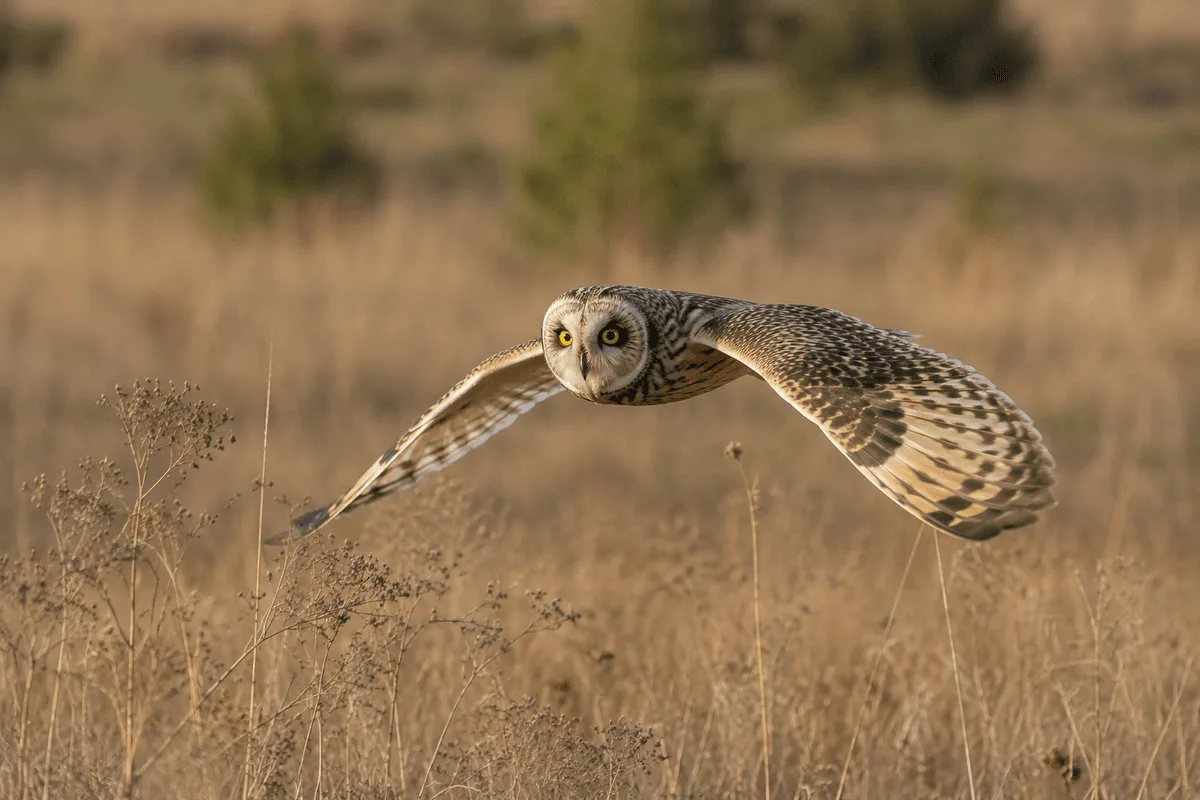
The Daylight Hunter of the Prairie
A true winter-only visitor to Texas, arriving from northern breeding grounds. Hunts low over open ground at dusk with buoyant, moth-like flight — coastal prairie near Rockport and the Panhandle plains are the most reliable winter spots.
Size
13.4–16.9 in. tall, 3.3–3.7 ft wingspan
Voice
Mostly silent in winter range; a raspy bark near the nest
Habitat
Open coastal prairie, marsh edges, agricultural fields
Organized by region — no two areas of Texas have the same owl lineup.
